
Do Heat Pumps Actually Save You Money?
Heat pumps are known for being energy-efficient—but what does that mean for your monthly energy bills?
The answer depends on what type of heating or cooling system you’re replacing. For some households, a heat pump can dramatically lower energy costs. For others, the biggest benefits are improved comfort, air conditioning, and long-term home value.
Here’s what Eastside homeowners can typically expect:
Replacing a Gas Furnace
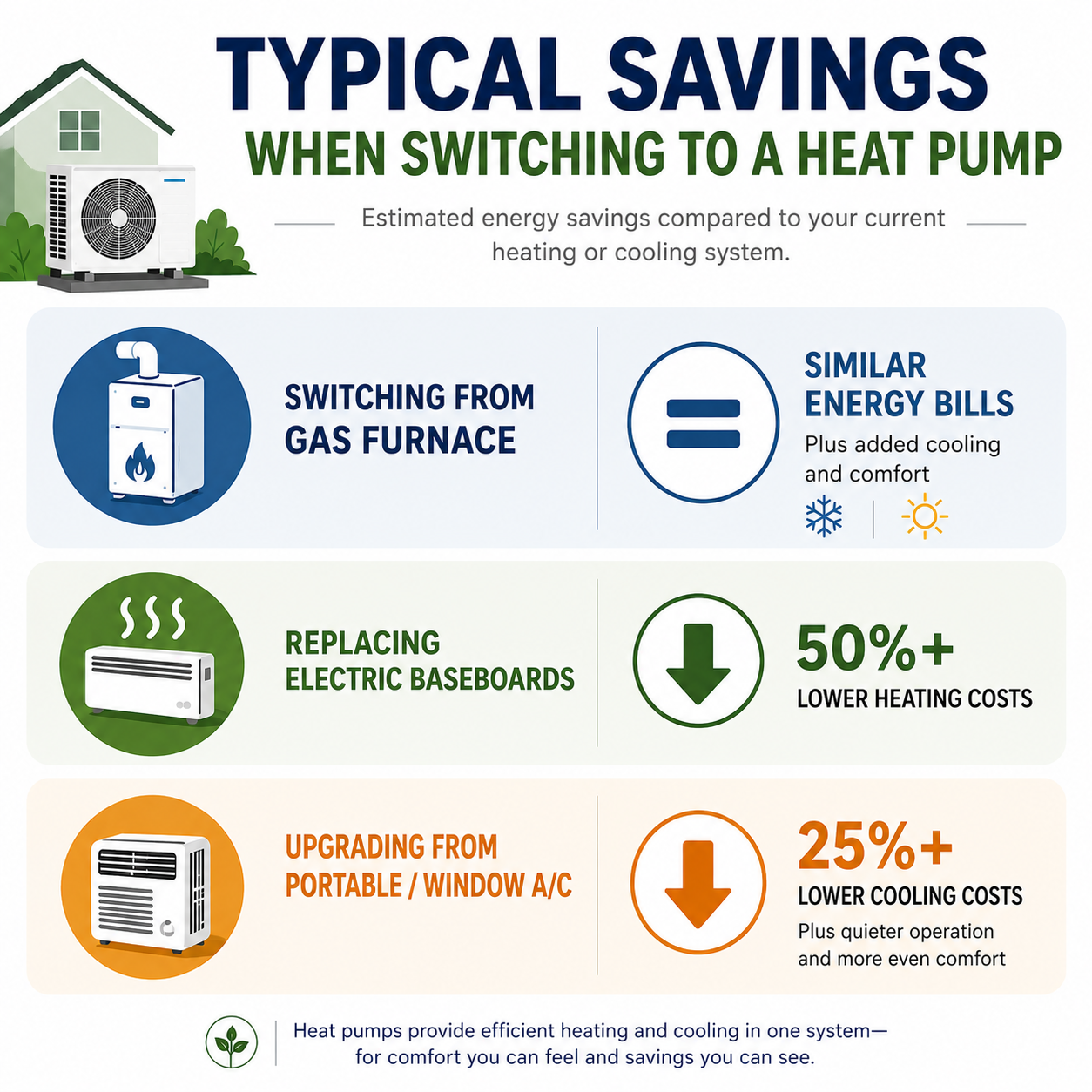
If you currently heat your home with natural gas, switching to a heat pump may result in little or no change to your monthly energy bills. That’s because natural gas remains a relatively low-cost fuel in Washington.
However, heat pumps are still incredibly efficient systems—providing 2–3 times more heating efficiency than a traditional gas furnace. And unlike a furnace, a heat pump also provides high-efficiency air conditioning during the summer.
For many homeowners, the value comes from:
Year-round heating and cooling in one system
Improved indoor comfort
Cleaner indoor air
Reduced carbon emissions
Avoiding the need for a separate A/C system
Replacing Electric Baseboards or Resistance Heat
This is where heat pumps really shine!
Homes using electric resistance heating—like baseboards, wall heaters, or ceiling heat—can often reduce heating energy use by 50% or more after installing a heat pump.
Traditional electric resistance systems work a bit like a toaster: they generate heat directly, which uses a large amount of electricity. Heat pumps work differently. Instead of creating heat, they move heat from outside into your home—making them far more efficient.
For many households, this can mean significantly lower winter electricity bills while also gaining whole-home cooling for summer.
Replacing Portable or Window A/C Units
If you rely on portable or window air conditioners, upgrading to a heat pump can also reduce cooling costs.
Heat pumps—especially ductless systems—are typically much more efficient than portable A/C units and can lower cooling energy use by 25% or more.
You’ll also gain:
Quieter operation
More even temperatures throughout the home
Better indoor comfort during heat waves
A permanent cooling solution without bulky window units
Boost Your Heat Pump Savings with Weatherization
A heat pump performs best when paired with a well-insulated, air-sealed home.
Simple weatherization improvements—like insulation and air sealing—can help your home hold heat in winter and stay cooler in summer. That means your heat pump doesn’t have to work as hard, improving comfort and lowering energy use even further.
Beyond Energy Bills: Other Benefits
Year-Round Comfort
Heat pumps both heat and cool your home, helping maintain more consistent indoor temperatures throughout the year. And during increasingly hot Pacific Northwest summers, reliable cooling can make a huge difference in comfort and health.
Increased Home Value
Installing a heat pump may increase your home’s value by an estimated 2–3%, making it an investment that can benefit you now and later.
Reduced Carbon Emissions
Switching from fossil fuel heating to an electric heat pump can reduce your household carbon emissions by 93% over the lifetime of the system.
Curious What You Could Save?
Energy Smart Eastside offers instant rebates, trusted contractor connections, and free guidance to help you explore whether a heat pump is right for your home.
Connect with an Energy Adviser and explore available rebates using our incentive calculator to get started.