
Ready to move forward with a heat pump? Start by gathering two to three free quotes from Energy Smart Eastside participating installers. Comparing recommendations can help you find a system that fits your home, comfort needs, and budget.
However, you may receive varying equipment recommendations and cost estimates from each installer, which can quickly become overwhelming to navigate. Below are some tips for what to expect when gathering quotes, what to ask your installers during a home assessment, and how to ensure you’re selecting the right system and getting the best deal.
Start by gathering multiple quotes

Kirkland homeowners Charlie and Geneva review a heat pump quote with an Energy Smart Eastside participating installer, who explains why he recommends the system for their home.
One of the best ways to make an informed decision on your heat pump installation is to gather and compare two to three quotes from qualified contractors. Comparing multiple estimates allows you to evaluate the thoroughness of home assessments, as well as equipment recommendations, installation approaches, and pricing.
Energy Smart Eastside maintains a network of participating installers who can help homeowners apply for available rebates and carefully select a system that best fits their home and budget, making it easier to maximize savings.
Before scheduling contractor visits, it helps to gather a few pieces of information that can support your home assessment process:
The age and approximate square footage of your home
Information about your current heating and cooling system
Recent utility bills
A list of comfort concerns, such as rooms that feel too hot in the summer or too cold in the winter
Providing this information up front can help contractors better understand your home’s needs and any required repairs or upgrades. Before installing your heat pump, you may also consider taking advantage of Puget Sound Energy’s Weatherization Rebate Program to further increase your home’s energy efficiency through insulation, air sealing, or duct improvements to decreasing energy costs with your new heat pump.
What to expect during a heat pump home assessment

Kirkland homeowners Geneva and Charlie walk through their yard with an Energy Smart Eastside participating installer to discuss where to place the heat pump’s outdoor unit.
It’s important to keep in mind that a heat pump is not a one-size-fits-all solution. A quality contractor should take the time to understand your home’s unique characteristics before recommending a specific heating system. During the assessment, your contractor should ask you questions about comfort, heating and cooling performance, whether certain rooms experience temperature fluctuations or drafts, and what your priorities are with your new heat pump. These conversations provide valuable insight into what system will best improve home comfort while maximizing your budget.
A thorough assessment should include an evaluation of factors that influence system performance including:
Existing heating and cooling equipment
Insulation in the attic, walls, floors, or crawlspace
Ductwork condition, airflow, and possible air leaks
Electrical panel capacity
Windows and doors and their ability to prevent drafts.
When Geneva reviewed her heat pump quote, her installer used a graph to explain how the recommended system would meet her home’s heating and cooling needs.
“Wow, that’s very tailored to the house that we live in, not someone else’s house, someone else’s space, someone else’s rooms.”
Heating load calculation
One of the most important parts of a home evaluation is using a heating load calculation to properly size a heat pump to your home.
A load calculation uses software and home-specific data to estimate the heating and cooling amounts required to keep your home comfortable during each season. The results vary based on the size of your home, insulation levels, window and door placement, ductwork and other existing equipment, and local climate.
While it may seem logical that a larger system would provide better performance, bigger isn't always better. An oversized heat pump may cycle on and off too frequently, reducing efficiency and comfort, and increasing energy costs. An undersized system may struggle to reach and maintain desired temperatures, especially during extreme weather conditions.
Understanding the results of your home’s load calculation and the recommended heat pump systems from each contractor can help you compare quotes more effectively.
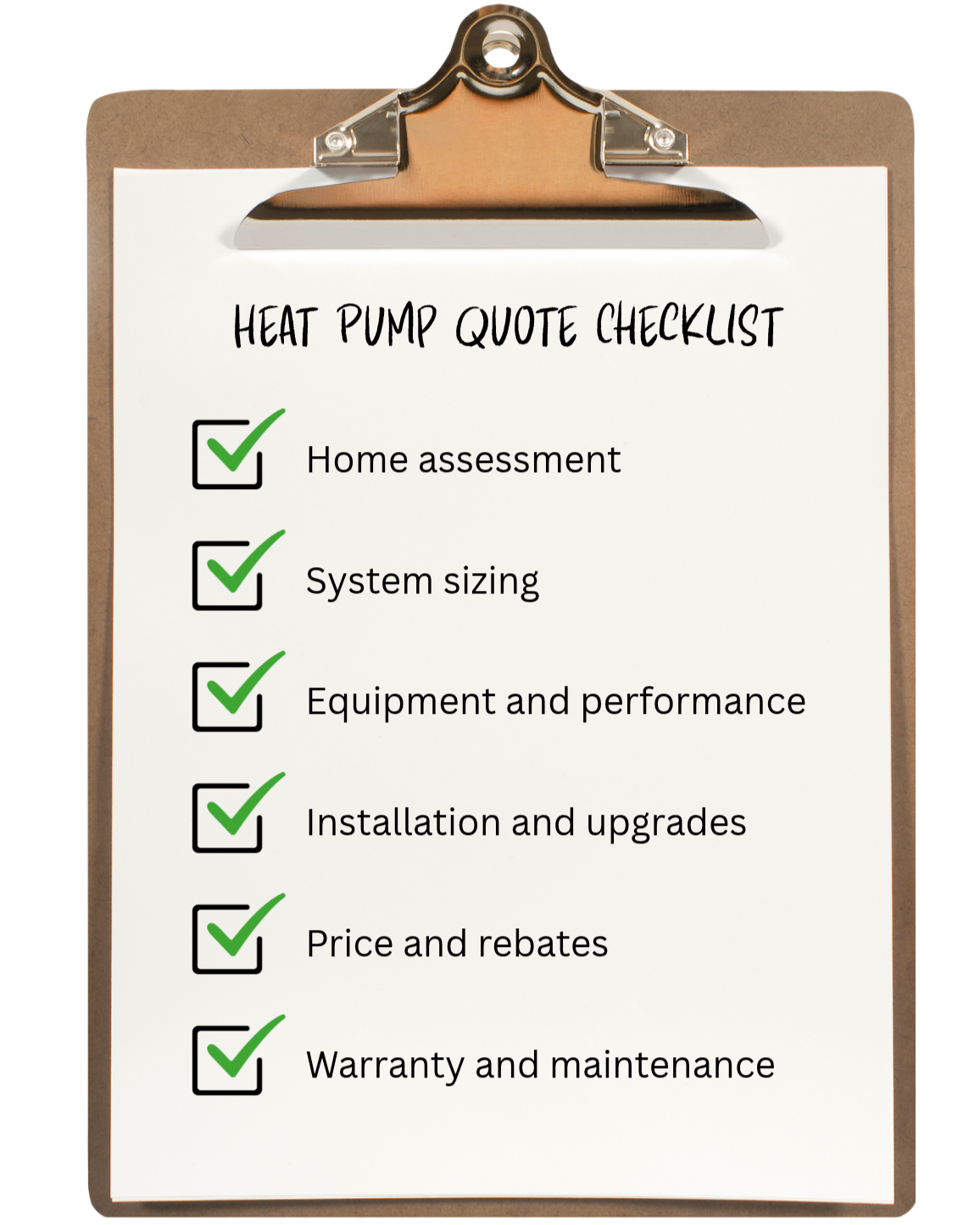
What to compare in each heat pump quote
Each contractor may recommend different heat pump brands and products, installation approaches, and additional system upgrades. It’s important to compare all criteria assessed by your installer, while ensuring your quote includes all rebates and incentives you qualify for.
Some installers may suggest a backup heat source (a gas furnace or electric strip-heating), while others may suggest an all-electric cold climate heat pump system. All-electric systems do not require a backup heating source and often qualify for more rebates than dual fuel systems. Additionally, electric strip heat is often very inefficient and may unnecessarily increase your energy bills. Ensure you understand your options and the recommendations your contractor offers before making a decision.
For a detailed checklist of items to compare, see Electrify Now's How to Compare Heat Pump Quotes handout.
Making the decision
After gathering multiple quotes and reviewing the recommendations, it's time to choose the heat pump that best fits your budget and priorities.
While cost is an important consideration, it shouldn't be the only factor driving your decision. Consider questions such as:
Which system best aligns with your comfort goals and budget?
Which contractor took the time to thoroughly assess your home and explain equipment sizing and performance?
Which company gave you the most confidence in their expertise, communication, and recommendations?
If you'd like to learn more about evaluating heat pump estimates, we also recommend Electrify Now's How to Compare Heat Pump Quotes webinar.
Need more help?
Installing a heat pump is a significant investment, and gathering and comparing quotes can feel overwhelming. Understanding what a quality assessment looks like and knowing which questions to ask can make the process much easier.
By gathering multiple recommendations, reviewing system specifications, and ensuring contractors understand your budget and priorities, you'll be better equipped to select a heat pump that delivers reliable comfort and energy savings for years to come.
Still unsure which quote is the best fit for your home? Schedule a free Energy Advisor call. Our team can help you review contractor recommendations, understand available rebates, and navigate the decision-making process with confidence.