
Can a Heat Pump Replace Your Furnace?
If you’re considering a heat pump, you may be wondering whether it can keep your home comfortable all winter.
For Eastside homes, the answer is yes! A properly sized heat pump can keep your home warm and comfortable throughout a typical Pacific Northwest winter. And unlike a furnace, it can also cool your home during the summer.
In short, a heat pump can:
Heat your home during the winter and cool it during the summer
Provide consistent, even temperatures
Circulate and filter indoor air
Reduce your household’s energy use
Lower your home’s greenhouse gas emissions
But heat pumps work differently from furnaces, and understanding those differences can help you choose the right system for your home.
How is a heat pump different from a furnace?
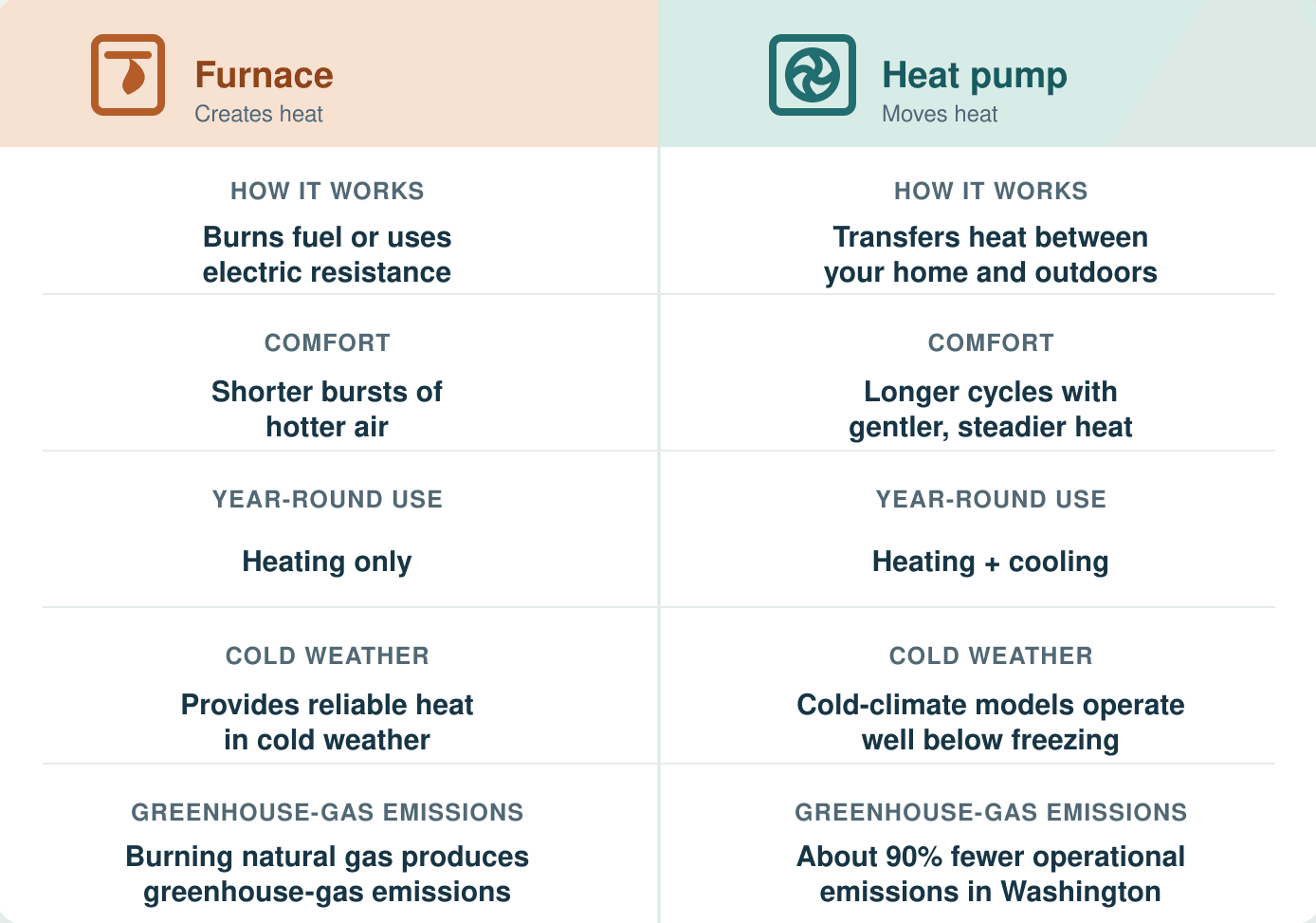
A furnace generates heat by burning fuel, usually natural gas, or by using electric resistance. It then distributes the heated air through your home’s ductwork.
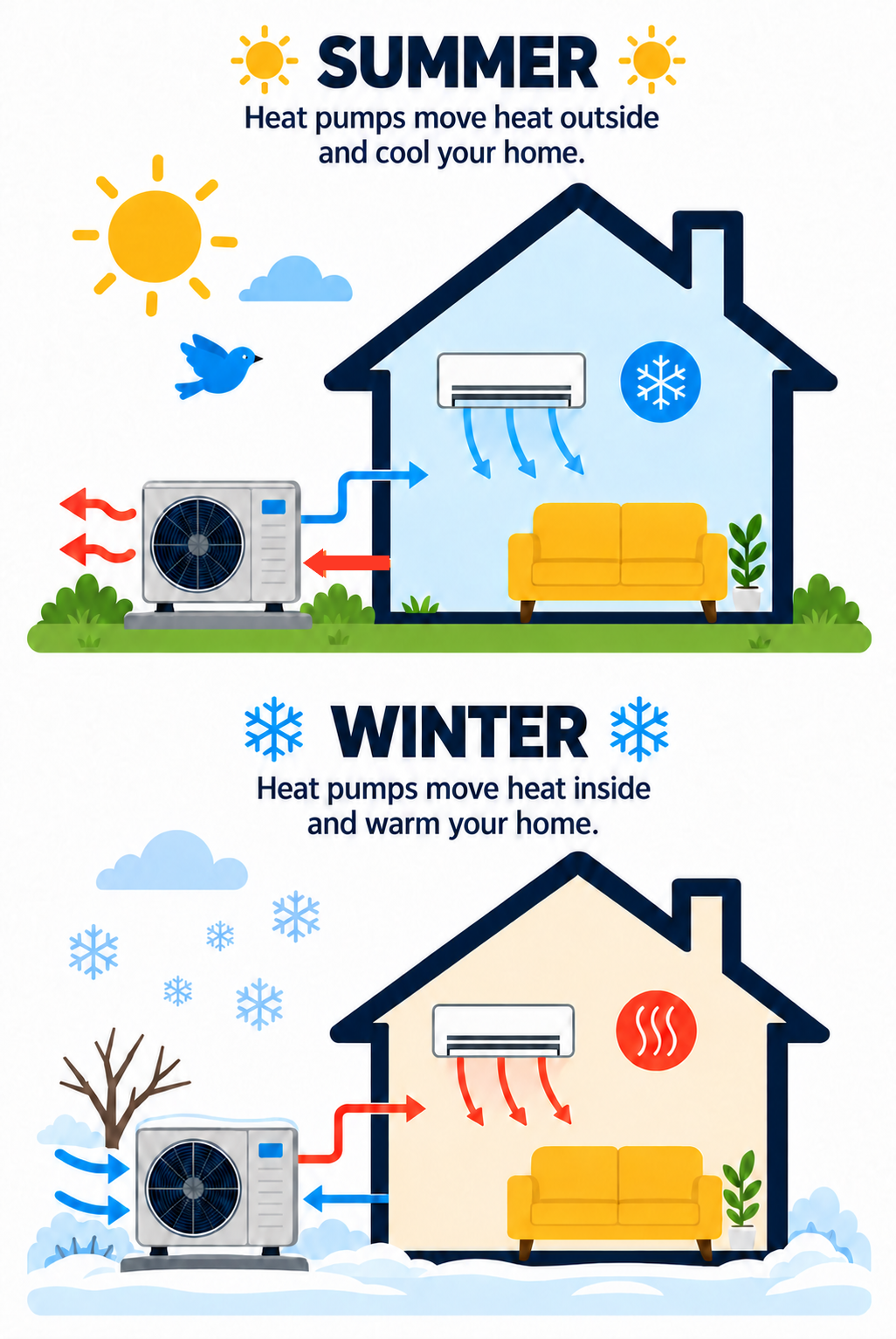
Instead of creating heat, heat pumps transfer heat from one place to another. During the winter, it draws heat from the outdoor air (even when temperatures fall below freezing!) and moves that heat into your home. And during the summer, it reverses direction and moves heat out of your home, working like an air conditioner.
Because heat pumps move heat rather than generate it, they can use substantially less energy than conventional heating systems. Electric-resistance systems typically deliver one unit of heat for each unit of electricity they use, while gas furnaces lose some energy through combustion and exhaust. By comparison, modern heat pumps can deliver three to four units of heat for each unit of electricity they consume.
Can a heat pump keep my home warm all winter?
Absolutely! Modern cold-climate heat pumps are designed to operate efficiently at temperatures well below what we typically experience in the Puget Sound region.
Heat pumps can serve as the sole heating source for an Eastside home, including during our coldest days. Modern cold-climate heat pumps continue operating below freezing, although their efficiency generally declines as outdoor temperatures fall, particularly into the single digits or lower. Performance varies by model, which is why choosing and properly sizing the right system for your home is important.
Your contractor should assess your home’s size, layout, insulation, windows, air sealing and existing ductwork. This assessment, often called a heating-load calculation, helps identify the type and size of heat pump needed to keep your home comfortable throughout the winter.
Do heat pumps feel different?
Yes. Furnaces often provide short bursts of very hot air before turning off, which can cause indoor temperatures to fluctuate throughout the day. Heat pumps generally run for longer periods while delivering gentler, steadier heat. This can create more consistent indoor temperatures with fewer hot and cold spots.
“[The heat pump] runs at a little calmer pace, kind of on cruise control. That’s been a big benefit.”
These longer operating cycles are normal and do not mean the system is struggling. However, heat pumps may take longer to make large temperature changes. Many modern heat pumps use variable-speed technology, allowing them to automatically increase or decrease their heat output to maintain a steady indoor temperature.
Your thermostat habits may also change after installing a heat pump. During the winter, heat pumps often operate most efficiently when the temperature remains relatively steady, rather than being lowered significantly overnight and raised again in the morning. As HVAC heat pump installers commonly advise: “Set it and forget it.” when setting your thermostat.
Beyond heating, what benefits does a heat pump provide?
Summer cooling: A furnace performs one primary function: heating your home. A heat pump provides both heating and cooling in one system. During increasingly warm Pacific Northwest summers, a heat pump can provide efficient, whole-home or targeted cooling without requiring a separate air-conditioning system.
More consistent comfort: Many modern heat pumps can automatically adjust their heating/cooling output instead of repeatedly turning on at full power and shutting off. By operating steadily at a lower level, the system can maintain more even indoor temperatures and avoid the noticeable indoor temperature swings associated with furnaces.
Indoor-air filtration: Because heat pumps often operate for longer periods than furnaces, they can circulate indoor air through the system’s filter more frequently. With a ducted heat pump and a compatible high-quality filter, this can help capture dust, pollen, and other airborne particles throughout the year—including during summer cooling.
Lower energy use: Heat pumps use significantly less energy than electric furnaces, baseboard heaters and wall heaters. Households switching from natural gas also reduce their total energy use, although changes in monthly utility costs depend largely on electricity and gas prices and how well the home is insulated and air sealed. For many households, one of the greatest benefits is gaining efficient heating and cooling from a single system.
Lower greenhouse gas emissions: Switching from a fossil-fuel furnace to an all-electric heat pump can substantially reduce a home’s greenhouse gas emissions. An analysis conducted by RMI estimated that an air-source heat pump in Washington produces approximately 93% fewer operational carbon emissions over 15 years than a gas furnace. That makes switching to a heat pump one of the most meaningful steps many Eastside households can take to reduce their climate impact.
Start planning before your furnace fails
The best time to explore your options is while your current furnace is still working. If it fails unexpectedly, you may feel pressure to install the fastest available replacement, even if another system would provide better long-term comfort and value.
Planning ahead gives you time to:
Compare heat pump options and installer estimates.
Determine whether electrical or weatherization upgrades are recommended.
Identify available rebates and incentives.
Choose between a fully electric or hybrid system.
Energy Smart Eastside offers heat-pump rebates to eligible homeowners in Bellevue, Issaquah, Kirkland, Mercer Island, Redmond and Sammamish. Depending on your household income, existing heating system and selected equipment, Energy Smart Eastside incentives may be combined with additional rebates from Puget Sound Energy.
So, can a heat pump replace your furnace? For many Eastside homes, the answer is: Absolutely! A well-designed heat pump system can provide reliable winter heating while adding efficient summer cooling, more consistent comfort and lower-emission home energy.
Explore available rebates, connect with an installer, or schedule a free call with an Energy Smart Eastside advisor to begin planning your upgrade.