
Hybrid Heat Pumps Explained: Keep Your Furnace and Add Efficient Cooling
Get the comfort and efficiency of a heat pump while making the most of your existing furnace.
If you've been thinking about adding a heat pump to your home but recently replaced your furnace, you might feel like you're stuck.
But that doesn't mean you have to wait years before enjoying efficient cooling and lower energy use.
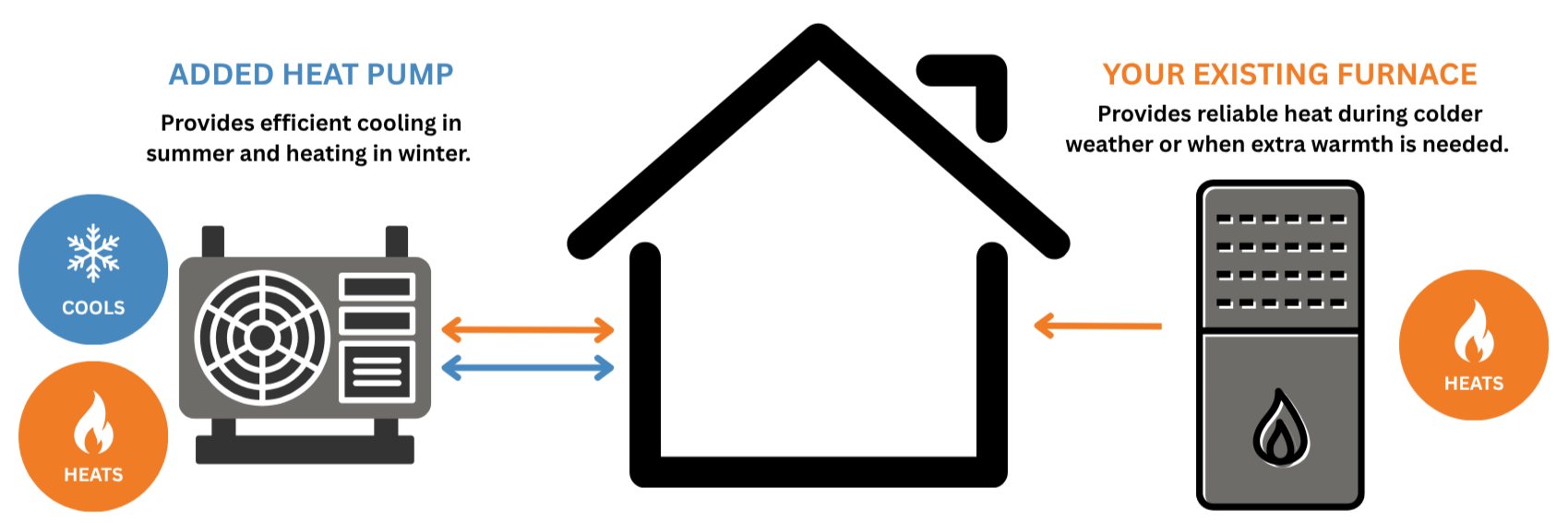
A hybrid heating system—sometimes called a dual-fuel system—lets you add a heat pump while keeping your existing gas furnace. The two systems work together automatically, allowing you to benefit from both.
Here's how it works, who it's best for, and why some Eastside homeowners are choosing this approach.
How does a hybrid heat pump system work?
A hybrid system pairs an electric heat pump with your existing natural gas furnace. Rather than replacing the furnace, an installer adds a heat pump that provides all of your home’s cooling and typically handles most of its heating during the Eastside’s relatively mild weather.
When the outdoor temperature falls below a changeover point set by your installer, the thermostat automatically switches to the gas furnace. The furnace then provides the higher-temperature heat many homeowners are accustomed to during colder weather. You don’t need to flip any switches or change your routine.
The result is efficient, year-round comfort while preserving equipment that still has useful life remaining.
Why choose a hybrid system?
Stay cool all summer
For many homeowners, the biggest motivation is simple: air conditioning.
Heat pumps provide efficient cooling during increasingly warm Pacific Northwest summers while also filtering and circulating your indoor air. That means greater comfort during heat waves and wildfire smoke season.
Lower your energy use
Because heat pumps move heat instead of generating it, they typically use much less energy than conventional heating systems in most weather conditions.
A hybrid system allows the heat pump to handle heating during the majority of the season, reducing natural gas use while keeping your existing furnace available when it's needed.
Get more life from your furnace
If your furnace is only a few years old, you may want to wait until it gets most of its use life before replacing it. A hybrid system lets you continue using that equipment while gaining the benefits of a heat pump today.
Reduce your home's emissions
Even though your gas furnace remains in place, a hybrid system can still significantly reduce your home's greenhouse gas emissions. That's because the heat pump handles most of the annual heating, while the furnace serves as backup during colder weather. While an all-electric heat pump offers the greatest potential for long-term emissions reductions, research shows that hybrid systems can capture a substantial share of those benefits. One analysis of Seattle, New York City, and Minneapolis found that hybrid heat pumps could achieve 40% to 90% of the emissions savings of all-electric systems, depending on factors such as climate, the electricity mix, and the temperature at which the system switches to the furnace.
Is a hybrid heat pump right for your home?
Hybrid systems can make financial sense for homeowners who already have a relatively new, well-functioning gas furnace. By keeping that furnace and adding a heat pump, homeowners can gain efficient cooling and reduce their natural gas use without replacing their entire heating system.
In Energy Smart Eastside’s 2026 installation data, hybrid projects that retained an existing furnace cost approximately 18% less before incentives—and 8% less after incentives—than fully electric ducted projects. That advantage disappeared when projects also included a new furnace.¹
A hybrid system may be a good fit if you:
Recently replaced your gas furnace and don't want to retire it early.
Want air conditioning without replacing your entire heating system.
Want to reduce your natural gas use while making the most of equipment you've already invested in.
Plan to transition to a fully electric home someday but aren't ready to do everything at once.
Want a lower upfront cost than replacing both your furnace and air conditioner with a fully electric system.
For many homeowners, a hybrid system offers a practical step toward home electrification while providing immediate comfort benefits.
¹ Based on Energy Smart Eastside installation data from 2026. The analysis included eight hybrid projects that retained existing furnaces, 12 hybrid projects that included new furnaces, and 63 fully electric ducted heat pump projects. Actual costs vary depending on the home, equipment, project scope, and incentive eligibility.
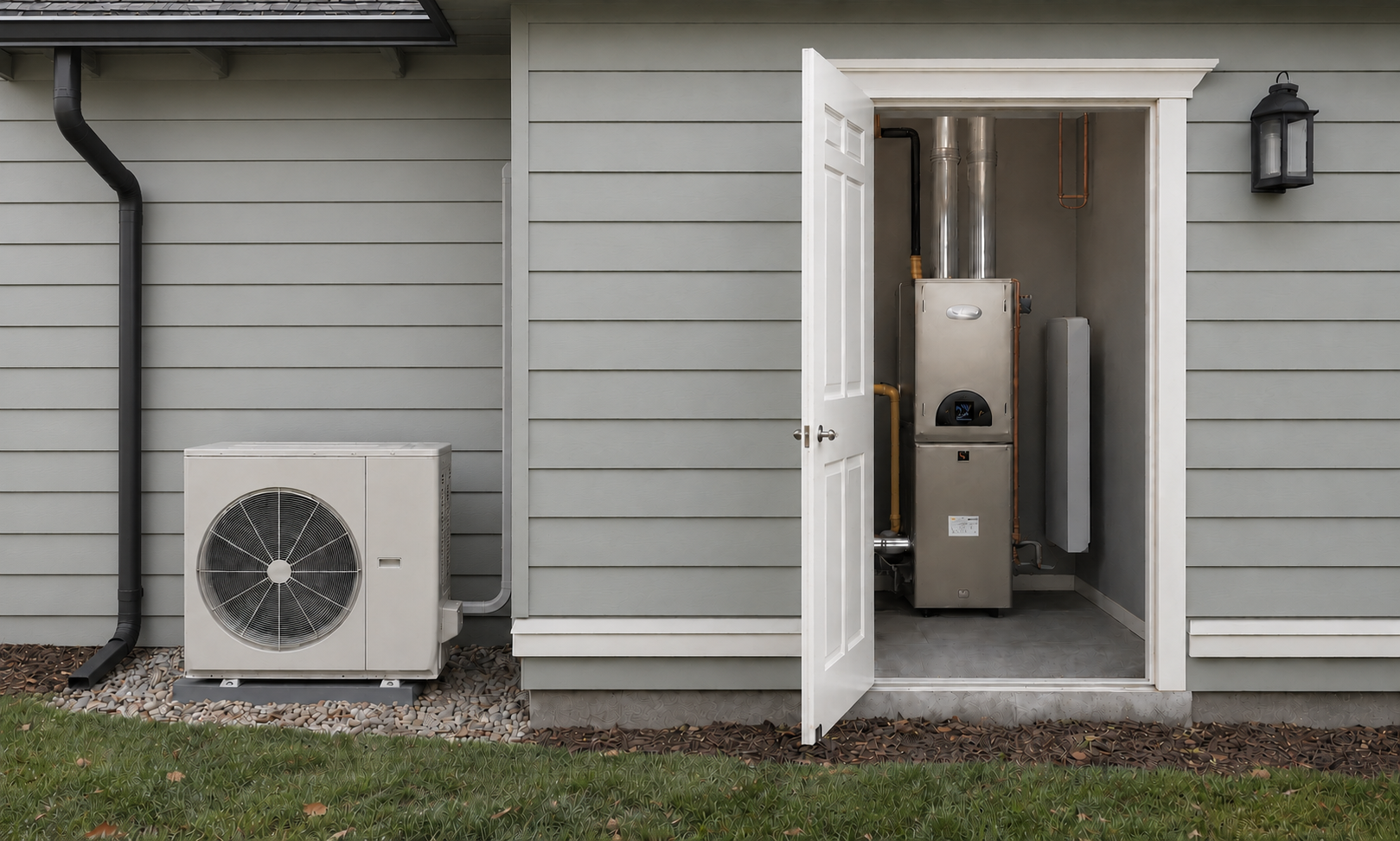
A heat pump paired with a gas furnace creates a hybrid heating system.
When to choose a fully electric system
A fully electric heat pump may be a better fit if:
Your furnace is nearing the end of its life.
You're replacing both your heating and cooling equipment.
You want to eliminate natural gas from your home.
You're interested in maximizing available incentives for qualifying fully electric systems.
An experienced installer can help evaluate your home's layout, existing equipment, and heating needs to determine which option makes the most sense.
What rebates are available?
Many hybrid systems qualify for Energy Smart Eastside’s $1,000 rebate, which may be combined with eligible Puget Sound Energy (PSE) incentives.
PSE incentives for qualifying hybrid systems may include:
The $300–$600 midstream rebate, depending on the heat-pump equipment selected.
Either a $1,500 Hybrid Heat Pump Rebate or a $2,400 Efficiency Boost rebate. The $2,400 rebate is available to income-qualified households earning no more than 90% of area median income.
Hybrid systems are not eligible for Energy Smart Eastside’s $5,000 Bonus Rebate, which is reserved for qualifying fully electric installations.
Available incentives depend on your existing heating system, household income, utility eligibility, and selected equipment. A participating installer can confirm which rebates apply to your project.
Not sure which option is right for you?
Whether you're considering a hybrid system or a fully electric heat pump, you don't have to figure it out alone.
Energy Smart Eastside's free Energy Advisor service can help you understand your options, compare available rebates, and connect you with participating local installers.
Sometimes keeping your furnace is exactly the right choice. Other times, going fully electric may provide greater long-term benefits.
The important thing is finding the solution that works best for your home, your budget, and your comfort.